
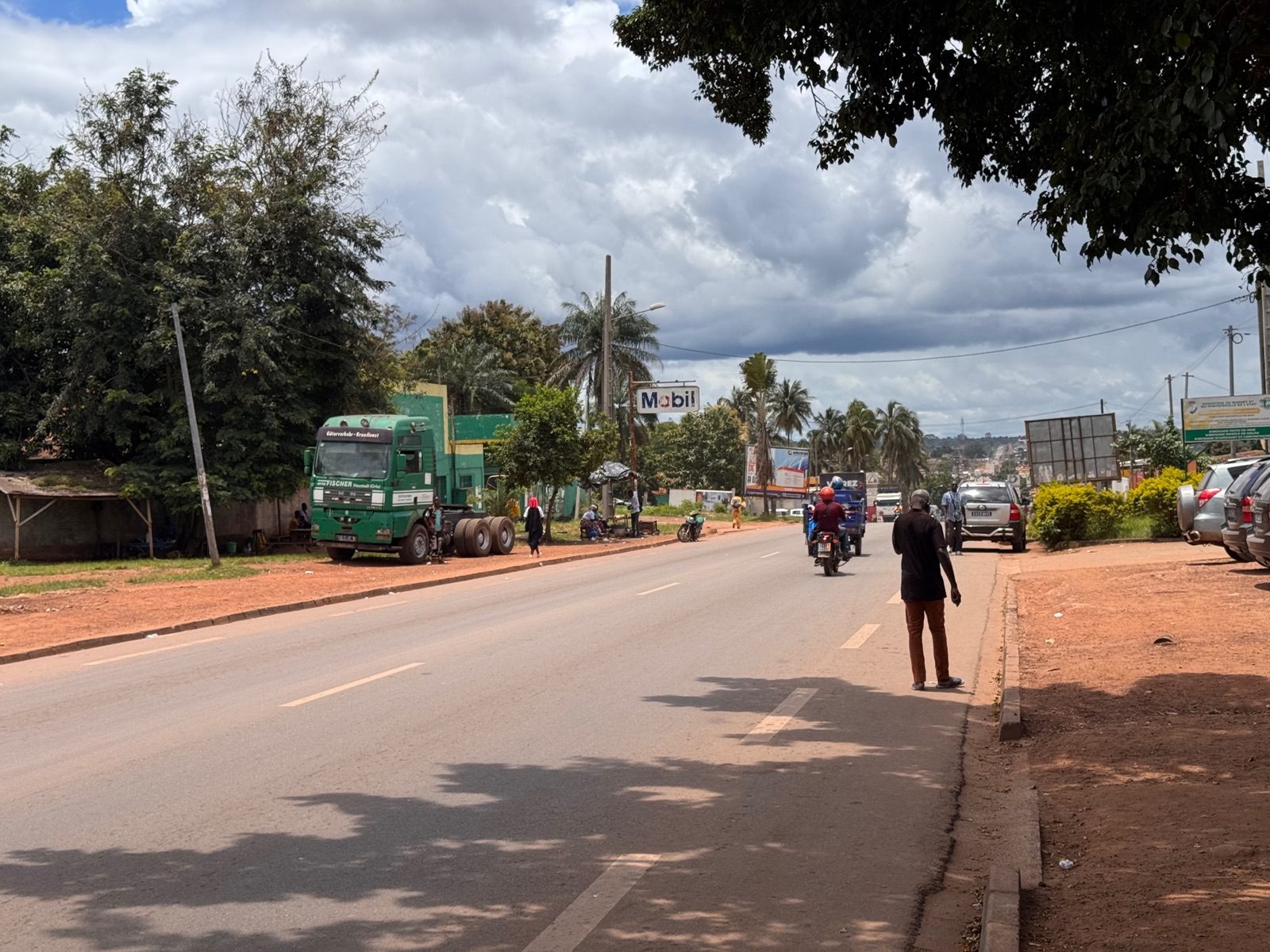
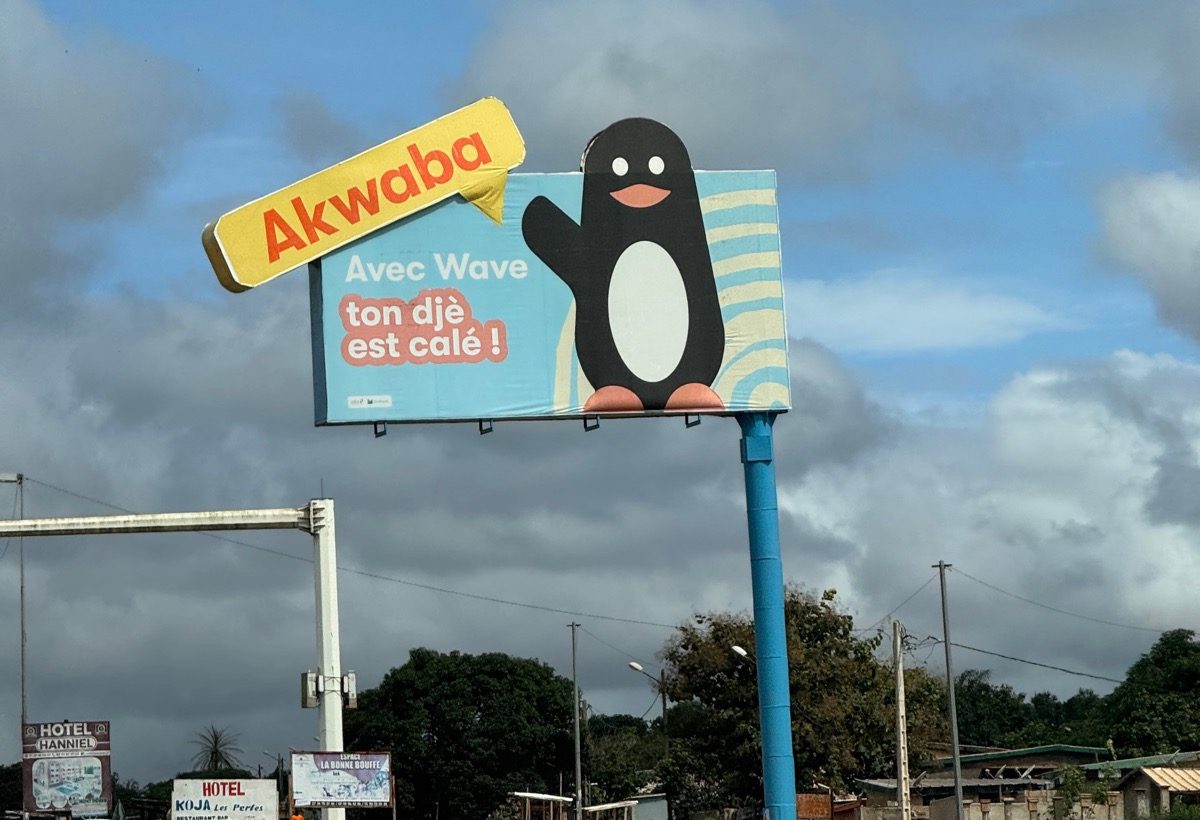
On a road in Côte d’Ivoire, a cartoon penguin waves at passing trucks from a billboard: « Akwaba. Avec Wave, ton djè est calé ! » The brand wrote its slogan in Nouchi, the street French of Abidjan. That one choice says more about go-to-market in this region than most market studies.
Key takeaways
- The neighborhood shop decides what reaches the consumer. Build the route to its shelf before you buy media.
- Price for the coin in the pocket: the price point and the pack size come before the margin structure.
- Close to half the population of Côte d’Ivoire and Senegal lives outside the cities, and the interior towns are where distributors win or lose the market for you.
- Mobile money has put a payment terminal in millions of phones and shops. It carries the small ticket; cash and bank transfers still carry the trade.
Start from the street, not from the deck
Most brand plans for Francophone West Africa start in a meeting room in Paris, Dubai or Casablanca, with a market size and a media plan. The market starts somewhere else: at the counter of a shop the size of a garage, where the owner decides which six brands of a category get shelf space, and which one to push when a customer hesitates.
Geography matters as much as the counter. The World Bank puts the urban share of the population at 54.5% in Côte d’Ivoire and 55.8% in Senegal in 2025. Read the other half of that number. Close to one consumer in two lives outside the cities and reaches your product through a chain of wholesalers, semi-wholesalers and village shops that no national media plan covers. A brand that wins Abidjan and Dakar has won half a launch.
The neighborhood shop is your real customer
The founder of C2A launched several consumer brands on the Senegalese market, from the first studies through pricing, distribution down to the neighborhood shop, and media. What that work teaches is easy to state and hard to execute: the consumer chooses on the shelf, and the shopkeeper decides the shelf.
Building the route to that shelf follows an order. Each skipped step costs you a season.
- Map the route before you sign anyone. Walk it: importer or local plant, distributor, wholesaler, semi-wholesaler, shop. Note who holds stock, who gives credit and who sets the retail price.
- Choose one distributor per zone and write down what you expect from them: coverage, days of stock, price discipline. An exclusive territory without a coverage target is a gift.
- Protect the margin of the wholesale chain. If the semi-wholesaler earns more on a competitor, your cartons stay at the back of the depot.
- Put your own people in the market to check the shelf, every week at the start. The distributor reports sell-in. Only the street shows sell-out.
- Release the media budget once the product sits on the shelf in the target zones. A radio spot that sends customers to an empty shelf trains them to buy the competitor.
We covered the distributor side of this work in building a distribution network across the Abidjan–Dakar–Bamako corridor.
Price for the coin in the pocket
Consumers in the region buy by the day, and many buy by the unit: one sachet, one small tin, one cube. The price point comes first and the pack follows it. A price that does not land on the coins a customer carries creates a change problem at every counter, and the shopkeeper solves it at your expense, by rounding up or by selling another brand.
Inflation looks calm. The BCEAO measured it at 0.8% across the WAEMU in June 2026 and expects 1.3% in August, with fuel prices and freight costs behind the rise. That second part matters most for a consumer brand. The cost of trucking a pallet to an inner town moves before the headline index does, and it eats the distributor’s margin first. When that margin goes, the distributor stops serving the interior, and your coverage shrinks without anyone telling you.
Brands built on imported products carry a second exposure, the currency, which we unpacked in FX and FCFA risk.
Mobile money changed the counter, not the whole cash cycle
The BCEAO counted 248 million mobile money accounts in the WAEMU at the end of 2024, with 30.9% of them active over the last 90 days. Merchant acceptance points more than doubled in one year, from 1.75 million to 3.7 million, after QR code campaigns by the operators.
The same report shows the limit. Payments made up 45% of mobile money transactions by volume in 2024, and under 10% by value. The small ticket has gone digital. The large flows, a distributor paying a wholesaler or a wholesaler paying for a truck, still move in cash, cheques and bank transfers.
For a brand, this opens two concrete moves: collect from shops by mobile money to shorten the cash cycle of the field force, and pay consumer promotions to the phone instead of printing them on the pack. It does not remove trade credit, which remains the price of shelf space in most categories.
Where C2A comes in
We work with manufacturers and brand owners entering Côte d’Ivoire, Senegal and the rest of the corridor, and with those relaunching a brand that stalled after its first year. We start in the market: route mapping, distributor selection, price-point architecture and a field check of the shelf. Then we build the plan with the numbers the street gives us. Twenty years of distribution operations in West Africa go into the diagnosis, and we stay for the execution.
Launching a brand in the region?
Bring us your product list and your target zones. In one session, we map the route to the shelf and the first three decisions to make.